What is a serviced office?
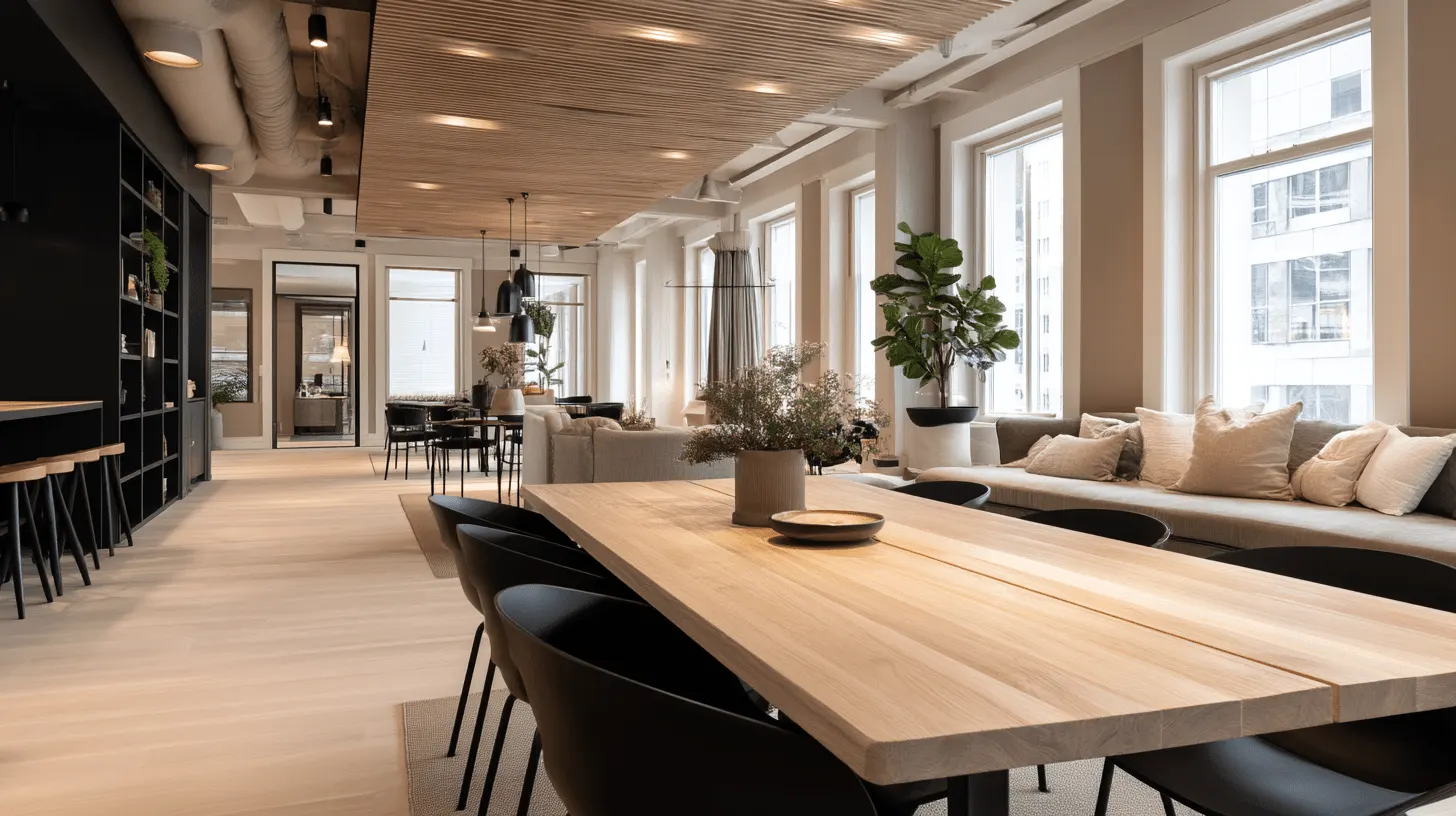
A serviced office is a furnished, ready-to-use private office inside a building run by an operator, who also provides the reception, cleaning, internet, kitchens and meeting rooms. You pay one monthly fee, usually priced per desk, that covers the space and most running costs, and you sign a flexible agreement, usually a licence, instead of a multi-year lease. You can often move in within days and change size at renewal.
The term is sometimes used loosely to cover any flexible workspace. In the UK property market it usually means a private office for your team in a shared, staffed centre, as distinct from a coworking desk or a self-contained managed office.
How a serviced office works
An operator leases or owns a building, fits it out as offices of different sizes and lets them to businesses on short agreements. Each business has its own lockable office. Everyone in the building shares the reception, kitchens, breakout areas and bookable meeting rooms.
Rubberdesk, which tracks the London flexible market, defines serviced offices as multi-desk offices where amenities are shared and rented short-term. That is the key difference from a managed office, where the space and amenities are specific to one business.
Typical steps to take one:
- Enquire with your team size, budget, area and move date.
- View a shortlist of buildings and specific offices.
- Agree terms: monthly fee, start date, length of agreement and any extras.
- Sign the licence and pay a deposit and first month’s fee.
- Move in. Furniture, internet and services are already in place.
What’s included
The point of a serviced office is that most of the cost of running an office is bundled into one bill. Wezoo’s 2026 guide lists these as normally included:
- The office and desks, with furniture
- Business rates
- Utilities
- Cleaning
- Building security
- Reception
- Shared kitchen and breakout areas
workin.space’s 2026 city pages add high-speed Wi-Fi, mail handling and, in many centres, a registered business address and a monthly meeting-room allowance. Canvas Offices’ 2026 London guide marks internet and maintenance as included too.
Amenities vary by building. Hubble’s UK page shows the share of UK flexible buildings offering each:
| Amenity | Share of UK buildings (Hubble) |
|---|---|
| Kitchen | 91% |
| Meeting rooms | 90% |
| 24-hour access | 90% |
| Breakout space | 85% |
| Tea and coffee | 80% |
| Showers | 68% |
| Parking | 36% |
| Roof terrace | 20% |
| Gym | 11% |
What usually costs extra
Wezoo’s 2026 guide lists meeting-room hours beyond the monthly credit, dedicated parking, private IT or extra bandwidth, printing above a fair-use cap and VAT as the usual extras. VAT is normally added to the quoted price, so check whether a figure is “plus VAT”.
How much it costs
Serviced offices are priced per desk, per month. Wezoo’s 2026 guide, based on 734 live UK private-office listings, puts the median at £249 per desk across the UK, £509 in London and £219 in regional cities. Hubble’s London guide, updated for Q2 2026, gives a London average of £624.
The full city-by-city table is in how much does a serviced office cost in the UK.
The contract: a licence, not a lease
Most serviced offices are let on a licence to occupy. A licence is a personal permission to use the space on the operator’s terms. It is not a lease, and it does not give you an interest in the property.
This matters because, in England and Wales, statutory security of tenure under the Landlord and Tenant Act 1954 applies to business leases, not licences. Trowers & Hamlins summarise it as “the 1954 Act only applies to leases and does not apply to licences.” Hubble’s 2026 guide notes that serviced office licences typically run about 12 months and that flexible occupiers have no automatic right to renew, though most operators do renew routinely.
For what to check before signing, read serviced office contracts explained.
Advantages
- Speed. Furnished, connected space you can move into quickly.
- Low upfront cost. No fit-out, furniture or IT build, usually just a deposit and the first month.
- Predictable bills. One monthly fee covering most running costs.
- Flexibility. Shorter terms and the option to move to a bigger or smaller office at renewal.
- Shared facilities. Meeting rooms, reception and kitchens a small team could not justify alone.
- Choice of location. Operators run centres in most UK city centres and business parks.
Disadvantages
- Higher cost per square foot than a lease for large, stable teams over long terms.
- Less control over layout, branding and house rules.
- Shared spaces can be busy, and you may hear neighbours.
- No statutory right to renew under a genuine licence, and renewal is often at the operator’s current rate.
- Extras add up if you use a lot of meeting-room time, printing or parking.
Serviced office vs other options
| What you rent | Typical commitment | |
|---|---|---|
| Coworking | A desk in a shared area | Monthly |
| Serviced office | A private office in a shared centre | Around 12 months (Hubble, 2026) |
| Managed office | A self-contained space for your business only | 18–36 months (Hubble, 2026) |
| Leased office | Space you rent and run yourself | 3–10 years (Hubble, 2026) |
A fuller comparison, with costs and legal differences, is in serviced vs managed vs leased offices.
Who uses serviced offices
Serviced offices suit:
- Start-ups and small businesses that need a professional base without a long commitment.
- Growing teams that expect headcount to change within a year or two.
- Companies opening in a new city that want a local office before committing.
- Project teams that need space for a fixed period.
- Larger firms moving to hybrid working that want a smaller, more flexible footprint.
Serviced office vs virtual office
A virtual office is not a physical office at all. It gives you a business address, usually with mail handling and sometimes call answering, and occasional access to meeting rooms or day offices. It suits businesses that want a professional address without a team working on site. A serviced office gives your team a private room to work from every day, and the address and mail handling usually come with it.
What to check when you view
A viewing is the best time to test whether an office will work day to day. Look at and ask about:
- The office itself. Natural light, ventilation, temperature control, noise from neighbours or corridors, and whether the desk count is realistic for the room.
- Shared spaces. How busy the kitchen and breakout areas are at peak times, and how easy it is to book meeting rooms.
- Access. Opening hours, out-of-hours access, guest arrangements and how deliveries are handled.
- Connectivity. Internet speed, whether you can have a private network and what extra IT costs.
- The bill. An all-in monthly figure including VAT, meeting-room allowance and any parking.
- The agreement. Term, notice period, how renewal is priced, deposit and any exit fee.
- Transport. Journey times for the people who will use the office most.
Comparing two or three buildings in the same area on these points usually shows quickly which offers better value.
Finding one
offices.co.uk lists 750+ serviced and flexible office buildings in 50+ UK cities, including over 380 in London, over 50 in Manchester, over 40 in Leeds and over 20 each in Bristol and Birmingham. Work out how much space you need, then tell us your team size, budget, area and move date and we will send a free shortlist with pricing within 48 hours.
Frequently asked questions
What does serviced office mean?
A serviced office is a furnished private office inside a building run by an operator, who also provides reception, cleaning, internet, kitchens and meeting rooms. You pay one monthly fee, usually per desk, that covers the space and most running costs, and you sign a short flexible agreement rather than a long lease.
What is included in a serviced office?
Wezoo's 2026 UK guide lists the desk and room, furniture, business rates, utilities, cleaning, building security, reception and shared kitchen or breakout areas as normally included. Internet, mail handling and a meeting-room allowance are also common. Extra meeting-room time, dedicated parking, private IT, heavy printing and VAT are usually charged on top.
How much does a serviced office cost?
Published 2026 figures put a serviced office desk at roughly £200 to £400 a month outside London and about £490 to £625 in London. Wezoo's 2026 guide gives a UK median of £249 per desk per month, £509 in London and £219 across regional cities. Prices are usually quoted before VAT.
Is a serviced office the same as coworking?
No. Coworking usually means renting a desk in a shared open area, while a serviced office gives you a private, lockable room for your team inside a shared centre. Many buildings offer both, and serviced office occupiers often share the same kitchens, meeting rooms and reception as coworking members.
How long is a serviced office contract?
Serviced offices are usually let on a licence rather than a lease. Hubble's 2026 guide says serviced office licences typically run around 12 months, and many operators offer shorter or rolling terms. A licence generally gives no statutory right to renew, so check renewal and notice terms before signing.
Last updated 9 October 2026.
Sources
- Wezoo — How Much Does Office Space Cost? A Complete Guide to UK Prices in 2026
- Hubble — Office space in the United Kingdom (2026)
- Hubble — Licence to occupy vs lease in the UK: implications for flexible office agreements (2026)
- Rubberdesk — London's flexible office market reprices as managed offices reshape the capital (March 2026)
- Canvas Offices — How much does office space cost in London? 2026 prices by area and team size
- workin.space — Coworking and offices in Glasgow (September 2026)
- workin.space — Coworking and offices in Cardiff (September 2026)
- Trowers & Hamlins — Licences: a quick solution may cause lengthy problems (2021)
Ready to Find Your Perfect Office Space?
Browse our extensive listings across the UK or let our team help you find the ideal workspace for your business.